

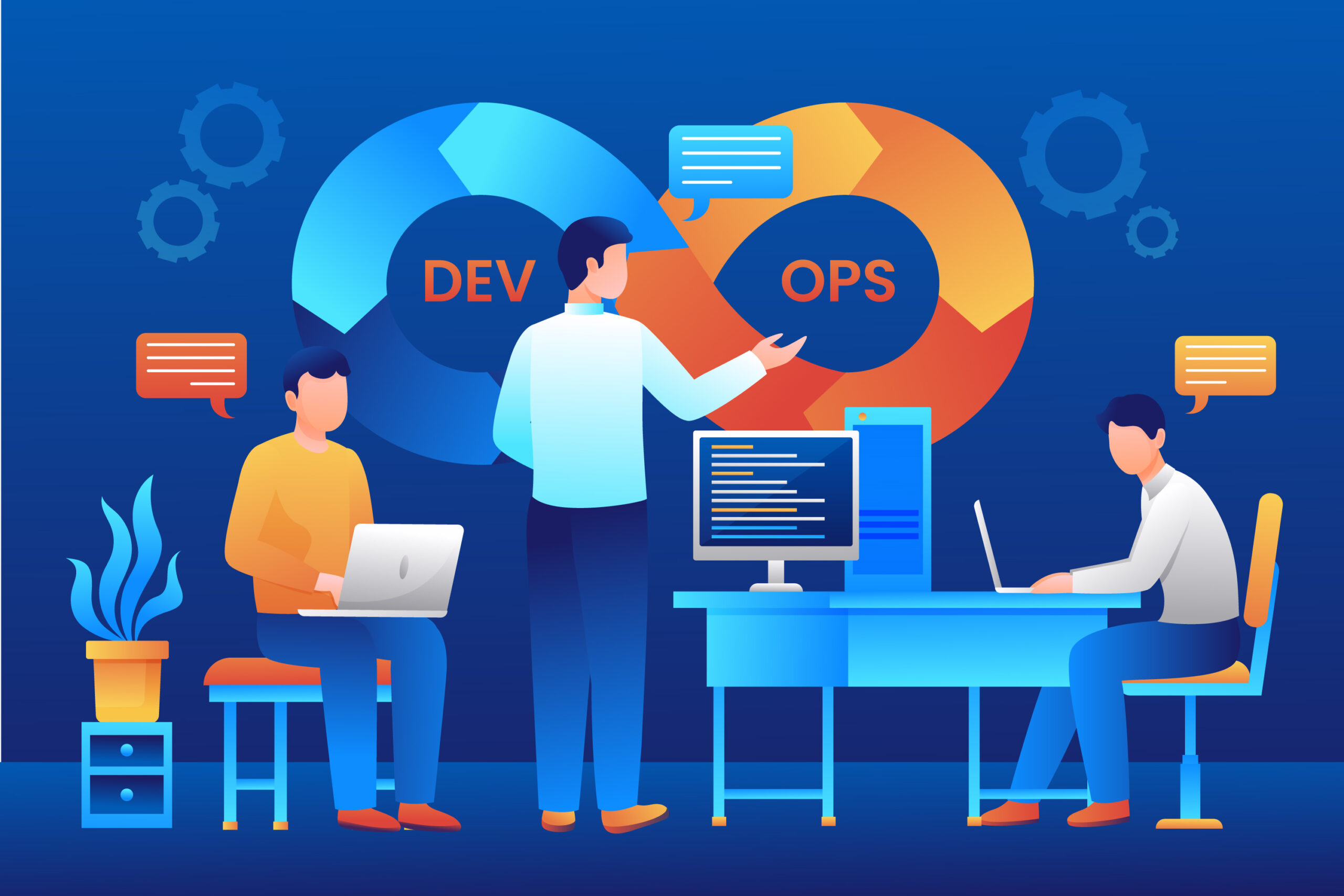
Nowadays, the Salesforce world is fast-paced, business stakeholders demand to hear about new features, improvements, and corrections every day, and stability and user experience must not suffer. This capability has been made possible by DevOps and Continuous Integration/Continuous Deployment (CI/CD) which allow Salesforce teams to automate releases and impose standards and minimize risk by using robust pipelines coupled with version control, automated testing, and governance.Since the Salesforce is at the center of sales, service, marketing and analytics operations, every deployment directly affects revenue and customer satisfaction. This sets the pace, quality, and compliance higher, pushing the teams to smaller and more frequent and safer releases that are pre-established through close cooperation between admins, developers, QA, and operations.
The article will discuss the way DevOps and CI/CD are changing Salesforce development in practice including the major concepts, business value, implementation tactics, and typical challenges so that you can make your release process a veritable competitive advantage.

DevOps and CI/CD in Salesforce Development
DevOps Definition
- DevOps is a set of practices, culture, and processes that bind software development (Dev) and IT operations (Ops) to facilitate fast and quality delivery.
- DevOps in Salesforce is like a closer relation in an otherwise independent team, so as to facilitate agile, frequent and reliable releases.
CI/CD Explained
- Continuous Integration (CI) is the approach where developers continuously incorporate code changes into a common repository which causes automated builds and tests to be run.
- Continuous Deployment/ Delivery (CD) builds on this by implementing a deployment of tested code to multiple environments- including production- without human interventions.
Complexity in Salesforce
- The Salesforce dynamic nature and metadata-driven architecture make it a difficult task to deliver software.
- DevOps and CI/CD optimize development processes, automate testing and deployments, and minimize release wars- guaranteeing fast innovation and strong quality on Salesforce solutions.
Read: 5 Common Family Disputes and How to Solve Them?
Changes to Salesforce development brought about by DevOps
Faster Releases
- The DevOps pipelines automate the process of integration and testing and deployment that may accelerate the release of features and bugs fixes.
- Indicatively, financial institutions use Jenkins and Git to enable them to deploy quickly and with no errors.
Team Collaboration
- DevOps silo busting DevOps silo busting is achieved by establishing open communication and responsibility between the development and QA and operation teams, which results in minimal bottlenecks and streamlines processes.
Automation and Efficiency
- Automated processes like combining codes, testing, deployment, and monitoring minimize the number of human errors and operational overheads and allow the developers to concentrate on strategic processes.
The purpose of CI/CD in Salesforce Development Transformation
Continuous Integration
- CI makes sure that all code changes are automatically combined and verified and that the mistakes are revealed at the beginning of the process due to unit, functional, and integration testing (Salesforce DX, Jenkins, and Gearset).
Continuous Deployment
- CD pipelines have the ability to automatically release approved builds to staging and production with minimum downtime and to keep Salesforce environments always up to date.
Automated Testing
- CI/CD has robust test automation (e.g. Apex in Salesforce, Selenium in UI) necessary to validate all the changes of the code before deploying it
Benefits of DevOps and CI/CD Implementation in Salesforce
- Better Fastness: Teams can adapt swiftly to evolving business demands, implementing characteristics or remedies in real time.
- Improved Quality: The constant testing, monitoring, and feedback loops will lead to the improvement of the quality of goods and the smooth user experience.
- Economy: Automation will minimize the handwork and the costs attributed to deployment failures, bug fixes, and sales support.
- Shorter Time-to-Market: Shorter development cycles make organizations competitive by bringing new capabilities to Salesforce users in a shorter time.
- Improved Security and Compliance: Security testing (DevOps) and policy-as-code practices are also integrated to verify that the pipeline is compliant across the board- which is a necessity in regulated industries.
Best Practices to Implement DevOps and CI/CD in Salesforce
- Measurability Develop Goals and Measures: Have success criteria (e.g. deployment frequency, lead time, error rates) and continually compare them to continually improve the processes.
- Automation First: Check (testing, deployment, monitoring) CI/CD tools to deploy resources and make them more trustworthy.
- Teamwork is most important: It is necessary to promote the collaboration of the developers, QA, and operations in such a way that the stable working process can be attained and that the problems can be solved in a timely manner.
- Continuous Monitoring and Feedback: Check pipelines and applications using an application such as Datadog, Nagios, or Salesforce Shield and obtain feedback and apply changes in advance.
- Proper Environment Management: Manage any number of orgs using Salesforce sandboxes and Environment Hub to synchronize changes to facilitate smooth development and deployment.
- Security Integration: Check security checks are integrated into the CI/CD process (DevOps), and vulnerabilities are detected early.
The solution to the Challenge of overcoming obstacles in Salesforce CI/CD Adoption
- Challenge: Low-Code Developer Skill Gaps: Salesforce admins and business users do not have the skills in coding and version control
Solution: Invest in version control training (GitHub), exercise the use of source tracking features, and use tools that have user-friendly interfaces. - Challenge: Inter-team Communication: Insufficient flow of information may lead to duplications.
Solution: Establish effective communication channels, openness in delegation of tasks, and frequent communication within teams. - Problem: Code Quality Assurance: The lack of testing may cause production flaws.
Solution: Use automated testing systems that go beyond minimum coverage requirements and use AI-driven testing solutions. - Challenge: Release Management Complexity: Overworked Engineers with release tasks.
Solution: Use automated testing systems that go beyond minimum coverage requirements and use AI-driven testing solutions. - Challenge: Environment Management: The presence of multiple Salesforce orgs makes the process of synchronization complex.
Solution: Ideas to use clear change management processes, sandboxes, scratch orgs, and environment hubs as a better control.
Conclusion
DevOps and CI/CD have become core capabilities that support the continued operation of successful Salesforce development teams, allowing continuous improvement in all areas of the software lifecycle. The individualization of processes is greatly simplified through the use of teams since complex change management is simplified.
Automation and version control systems eliminate manual processes that are prone to errors, and this enables frequent and incremental release with minimal risk and is less disruptive. The regression tests which have been fully automated, the analysis of the code which is done at a hand and the checks on the compliance which are part of the CI/CD pipeline will ensure that all features and settings are of the best quality and that they meet all the rules.
DevOps and CI/CD adoption contribute to making the companies more transparent, collaborative, and responsible in business, administration, and development teams. By providing greater visibility and feedback loops, teams can troubleshoot more efficiently, scale more dependably, and provide users with a more secure and innovative experience on Salesforce. The market is becoming agile, and agile market leaders are making or making it. Salesforce DevOps and CI/CD should become the center of your Salesforce strategy to maintain excellence and surpass the expectations of your customers.